Atlas Publishing Division
A galaxy division operating under the universal framework defined in Structural Intelligence™.
Welcome

Atlas Publishing is the documentation and clarity engine of Structural Intelligence — the division responsible for turning structural truth into written form that can be preserved, taught, and deployed across generations.
- What Atlas Is
- Why Publishing Matters
- How Atlas Protects Clarity
About This Division
Atlas converts structural clarity into stable, durable, human‑readable form — books, manuals, dictionaries, and educational lines that anchor the entire Structural Intelligence ecosystem.
- Publishing Engine
- Structural Standards
- Documentation Integrity
Focus Areas
Atlas maintains the structural backbone of the written system — ensuring every diagram, definition, and narrative remains aligned across all audiences and deployment environments.
- Atlas Dictionary
- Education Line
- Holding the Line Manuals
- Captain Cannon Series
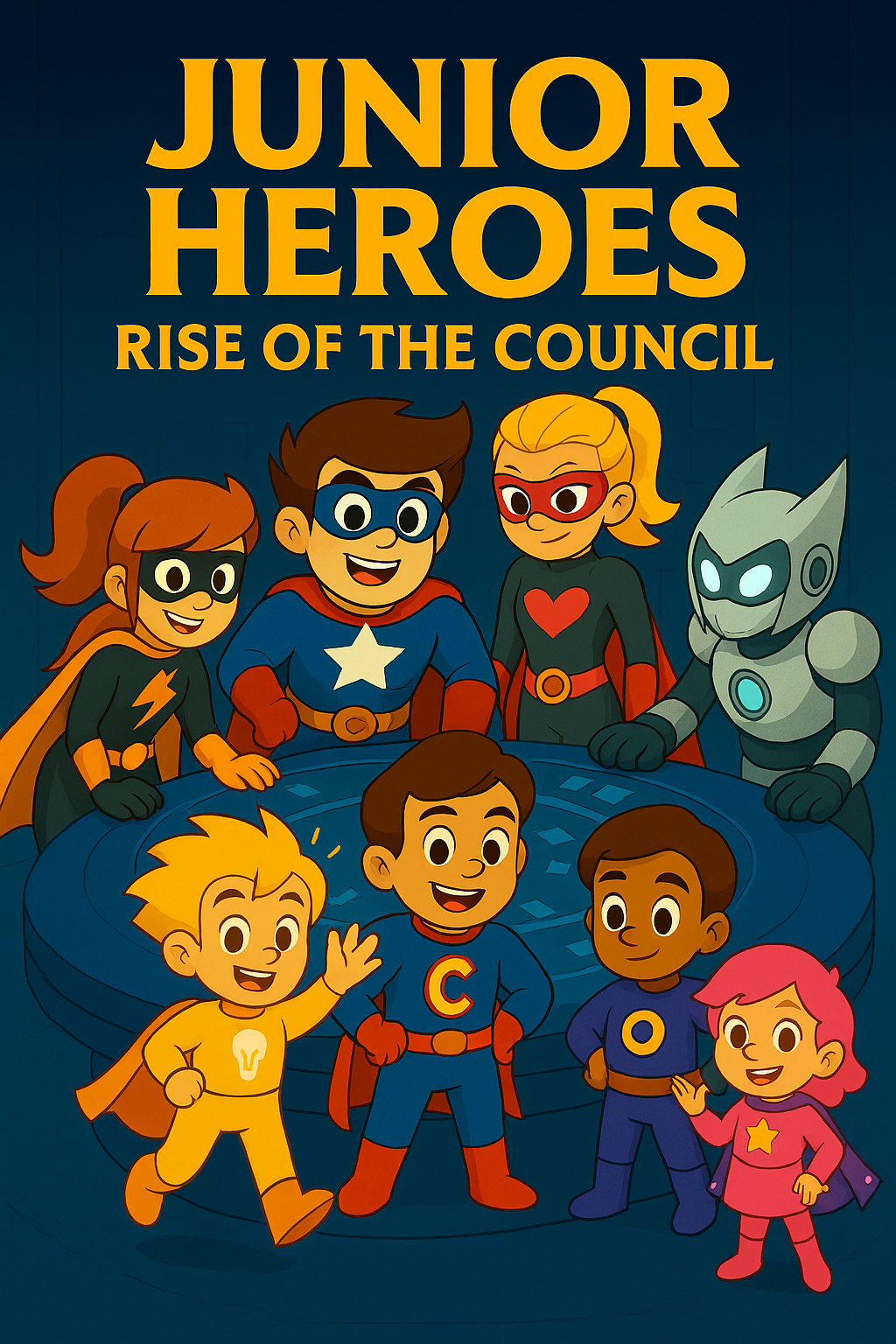
- Junior Heroes
Vision Quote

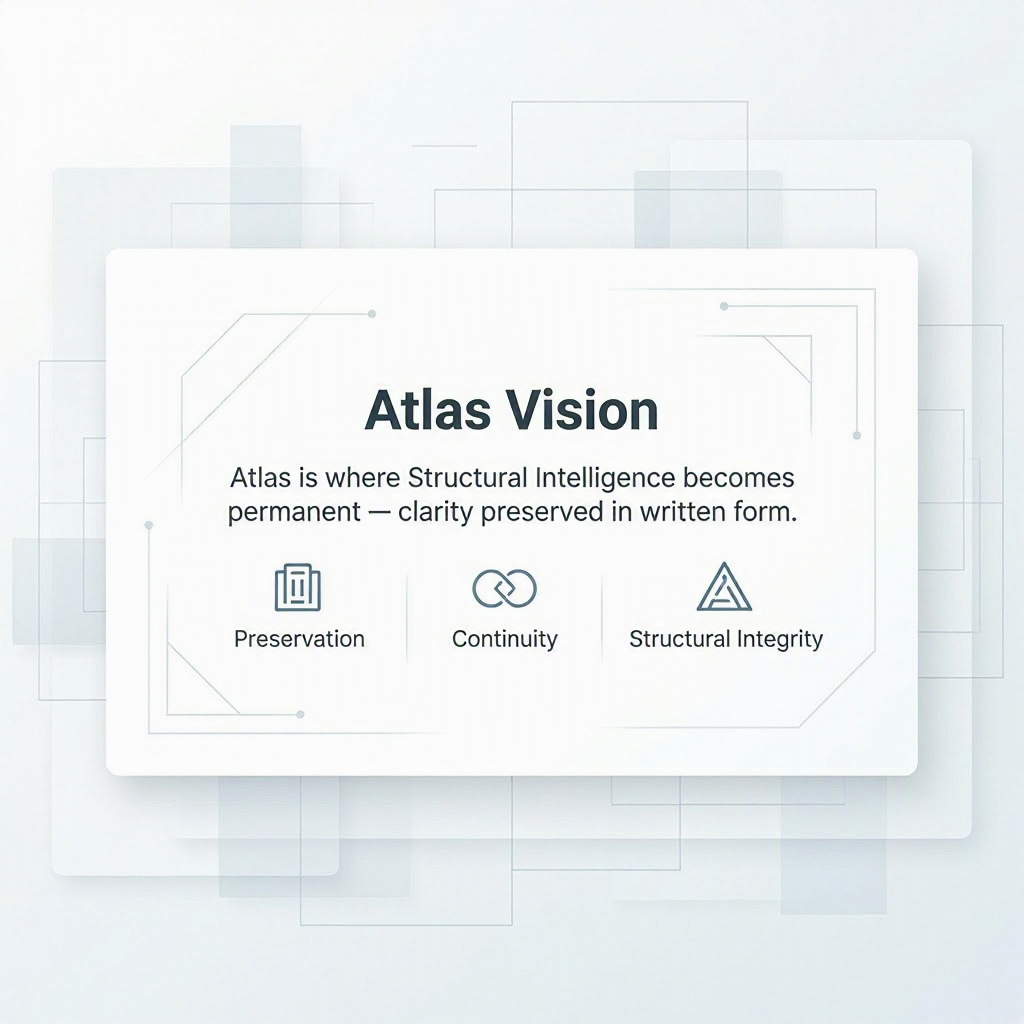
“Atlas is where Structural Intelligence becomes permanent — clarity preserved in written form.”
- Preservation
- Continuity
- Structural Integrity
What Atlas Is
Atlas is the publishing and documentation division of Structural Intelligence — the place where clarity becomes permanent. It transforms structural frameworks into books, manuals, and educational materials that can be trusted across generations.
Purpose
Atlas exists to prevent drift. By locking definitions, diagrams, and narrative frames into a unified publishing system, Atlas ensures that every audience — youth, leaders, families, institutions — speaks the same structural language.
Meaning Behind the Name
The name “Atlas” represents weight‑bearing clarity — the structural foundation that supports the entire ecosystem. Atlas carries the responsibility of preserving the written backbone of Structural Intelligence.
How Atlas Supports You
Atlas provides stable, aligned, non‑drifting materials for leaders, educators, families, and institutions. Every concept introduced in a children’s story can be found again — precisely defined — in the Atlas Dictionary or a leadership manual.
Atlas Product Lines
Atlas maintains several major clarity lines, each structurally aligned but tailored to different audiences:
- Atlas Dictionary: The core lexicon of Structural Intelligence.
- Education Line: Curriculum for schools and homeschool networks.
- Holding the Line Manuals: Leadership and culture frameworks.
- Captain Cannon Series: Youth‑to‑adult clarity pipeline.
- Junior Heroes: Early‑reader clarity stories.
Featured Publications
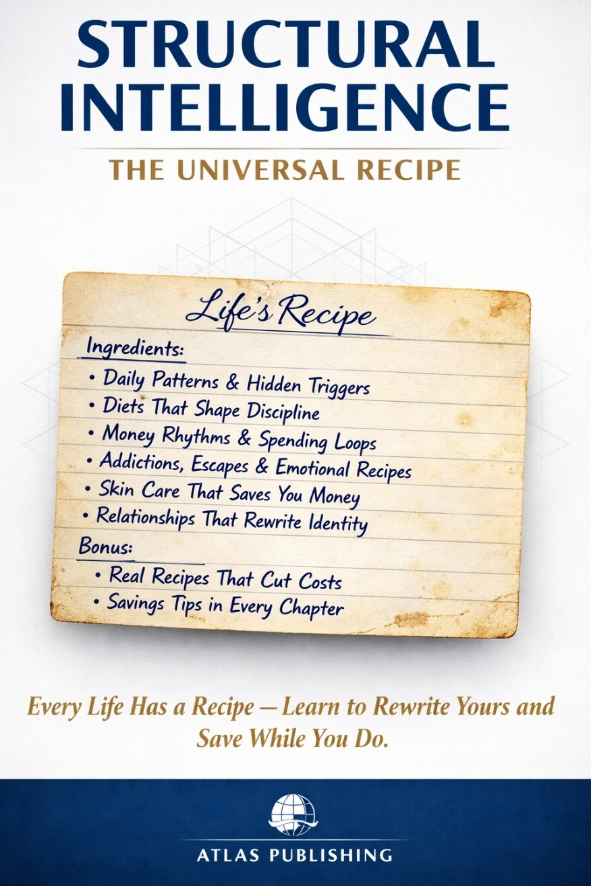
This book is a clear, cutting‑edge life guide — a smart investment built with clever money‑saving tips, practical daily recipes, health and skin‑care strategies, and budget‑minded routines that deliver clarity and value from day one. Designed to pay for itself within the first week, it turns everyday life into a Master Chef’s kitchen where each routine becomes a crafted dish of efficiency, wellbeing, and savings.
Every chapter includes a Bonus Recipe & Money‑Saving Tip, offering practical guidance paired with financial swaps that reduce waste, lower costs, and increase daily value. One swap covers the price of the book. Everything after that becomes profit in better routines, better decisions, and better daily structure.

Vantage Point is a clarity‑driven guide designed to strengthen decision‑making, personal structure, and the ability to see life from a higher strategic altitude. Built as a practical self‑improvement tool, it helps readers identify patterns, remove noise, and move forward with sharper awareness and stronger internal alignment.
Each chapter delivers a clean, actionable perspective shift — a vantage point — that improves judgment, reduces confusion, and reinforces the daily architecture people rely on to stay focused, confident, and structurally sound.
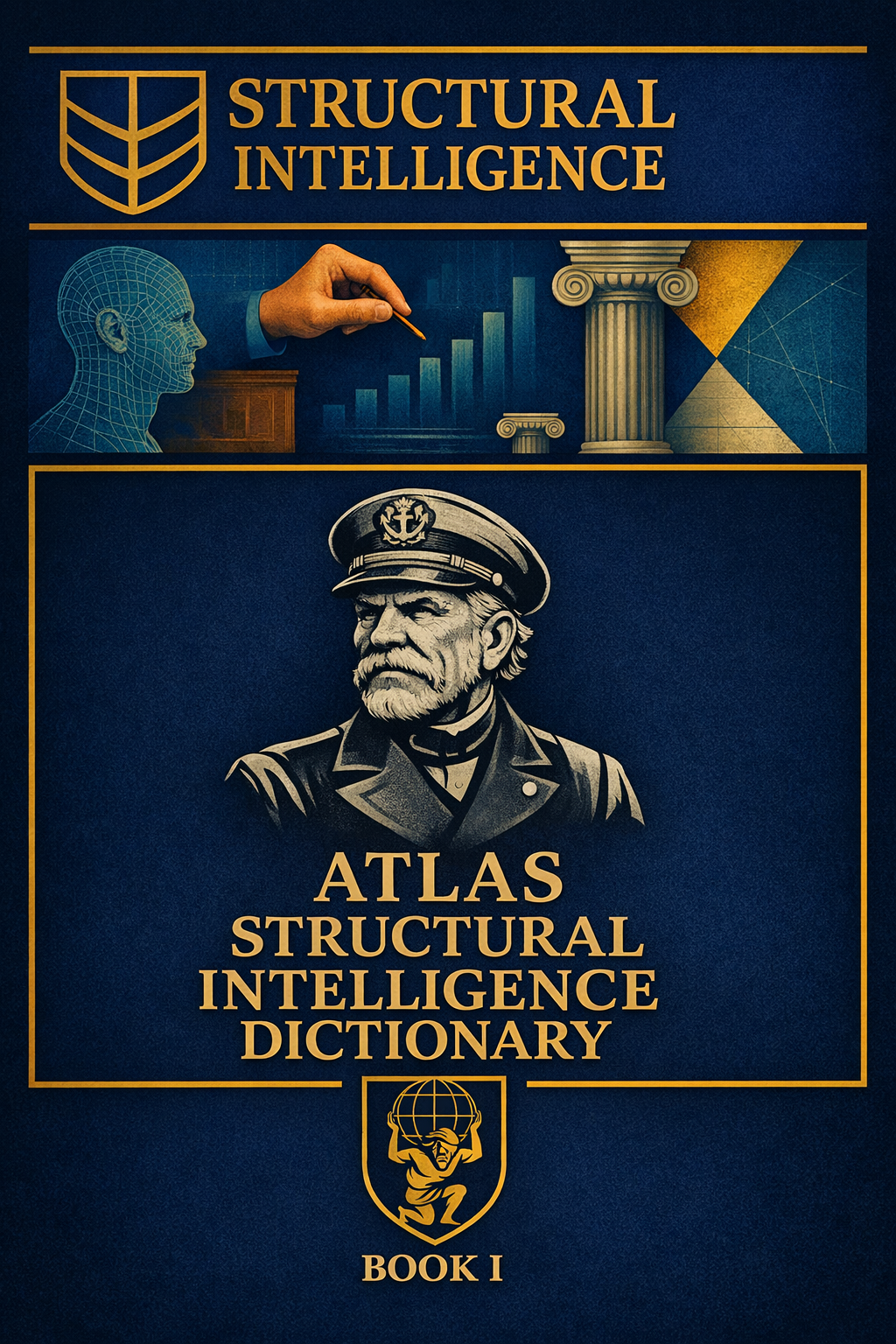
The Atlas Dictionary of Structural Intelligence is the first of its kind—a discipline‑grade reference work establishing the complete lexicon for Structural Intelligence, a new architectural framework for understanding patterns, decisions, behaviors, and organizational structures through a unified symbolic system.
This inaugural edition defines the language of the field, blending standard English definitions with Structural Intelligence contextual layers to create a precise, drift‑proof vocabulary for leadership, design, governance, and operational clarity.
Each entry follows a consistent, professional, Webster‑grade format, including:
• Standard definition
• Business and operational relevance
• Structural Intelligence contextual interpretation
• Symbolic resonance layer
The result is a dictionary that functions not only as a linguistic reference, but as a structural tool—enabling leaders, builders, educators, and analysts to communicate with clarity, reduce ambiguity, and anchor decisions in stable conceptual architecture.